

AI-driven website builders are starting to change how this work gets done. Tools like Google Stitch and Framer AI offer a different path. You describe your idea in plain language and get a usable design within minutes.
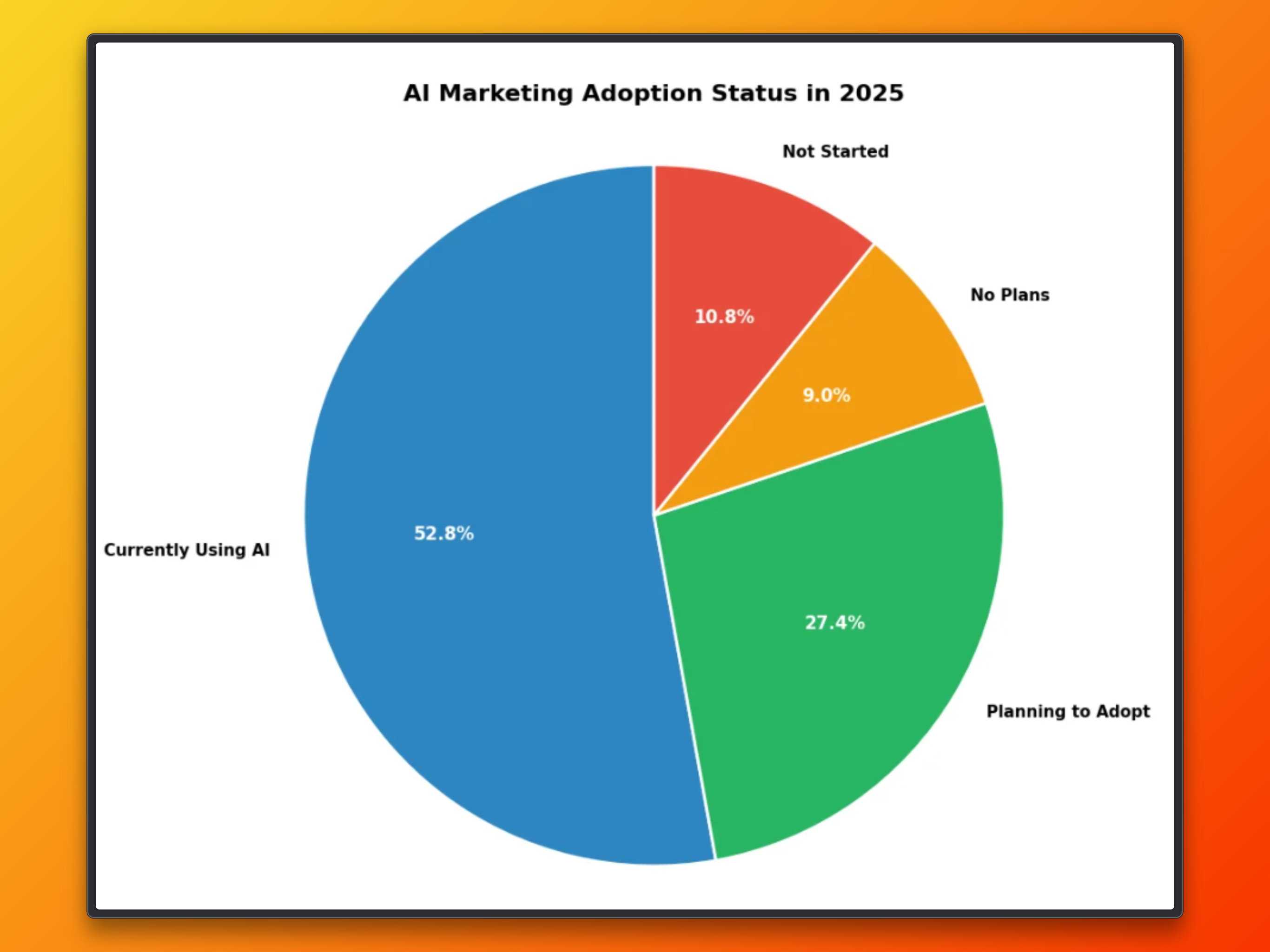
Recent data shows how quickly this trend is growing. According to Salesgroup, 52.8% of companies are already using AI marketing tools. This reflects a clear focus on speed, efficiency, and output.
For marketers, this has clear value. It reduces dependence on design and engineering teams and shortens campaign cycles. It also opens the door to testing more ideas in less time. Work that once needed coordination across roles can now begin with a simple prompt.
This raises an important question. How far have these tools really come? Are they ready for real marketing workflows, or are they still better suited for early testing?
This article explores that question by comparing Google Stitch and Framer AI, with a closer look at how Google Stitch supports practical marketing use cases.
How Far AI-Driven Website Builders Have Evolved
Website building has changed step by step. It started with templates and manual setup, where marketers had to pick layouts, adjust sections, and wait for designers or developers to complete the page.
Then came drag-and-drop builders. They gave more control, but the process still took time. Creating multiple landing pages for campaigns was possible, yet not fast enough for quick testing.
AI takes this further. Now, you can describe a page in simple words and get a full design in seconds. Some tools can even read images or rough sketches and turn them into layouts. The focus moves closer to ideas, not manual design work.
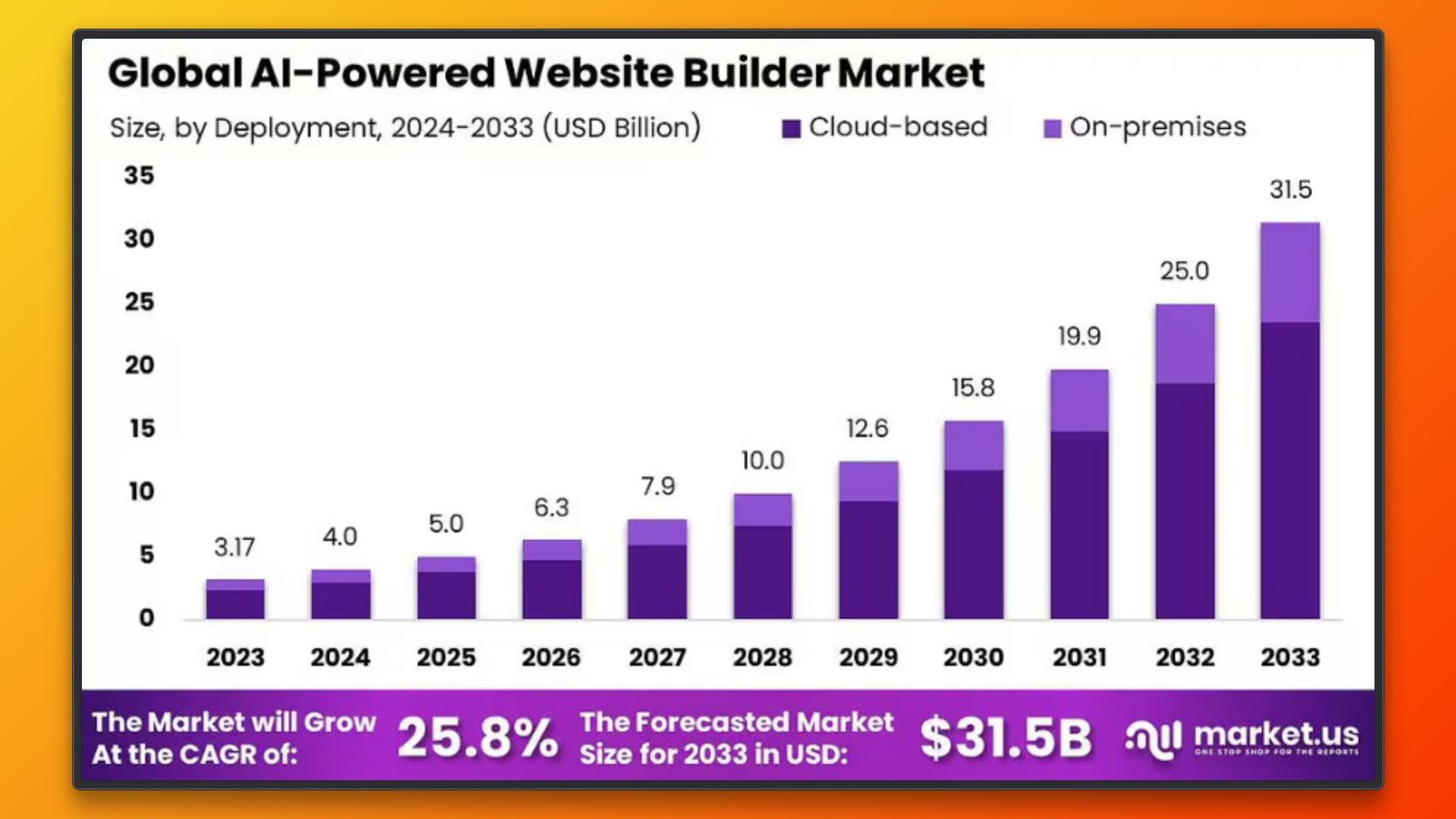
This change is also visible in market growth. The global AI-powered website builder market is expected to reach $31.5 billion by 2033, up from $3.17 billion in 2023, at a CAGR of 25.80%. For marketers, this means one clear improvement. Faster testing, quicker changes, and more control over early ideas.
Tools like Google Stitch and Framer AI are built on this progress. They reduce the time between an idea and a usable page, each handling a different part of the process.
What is Google Stitch?
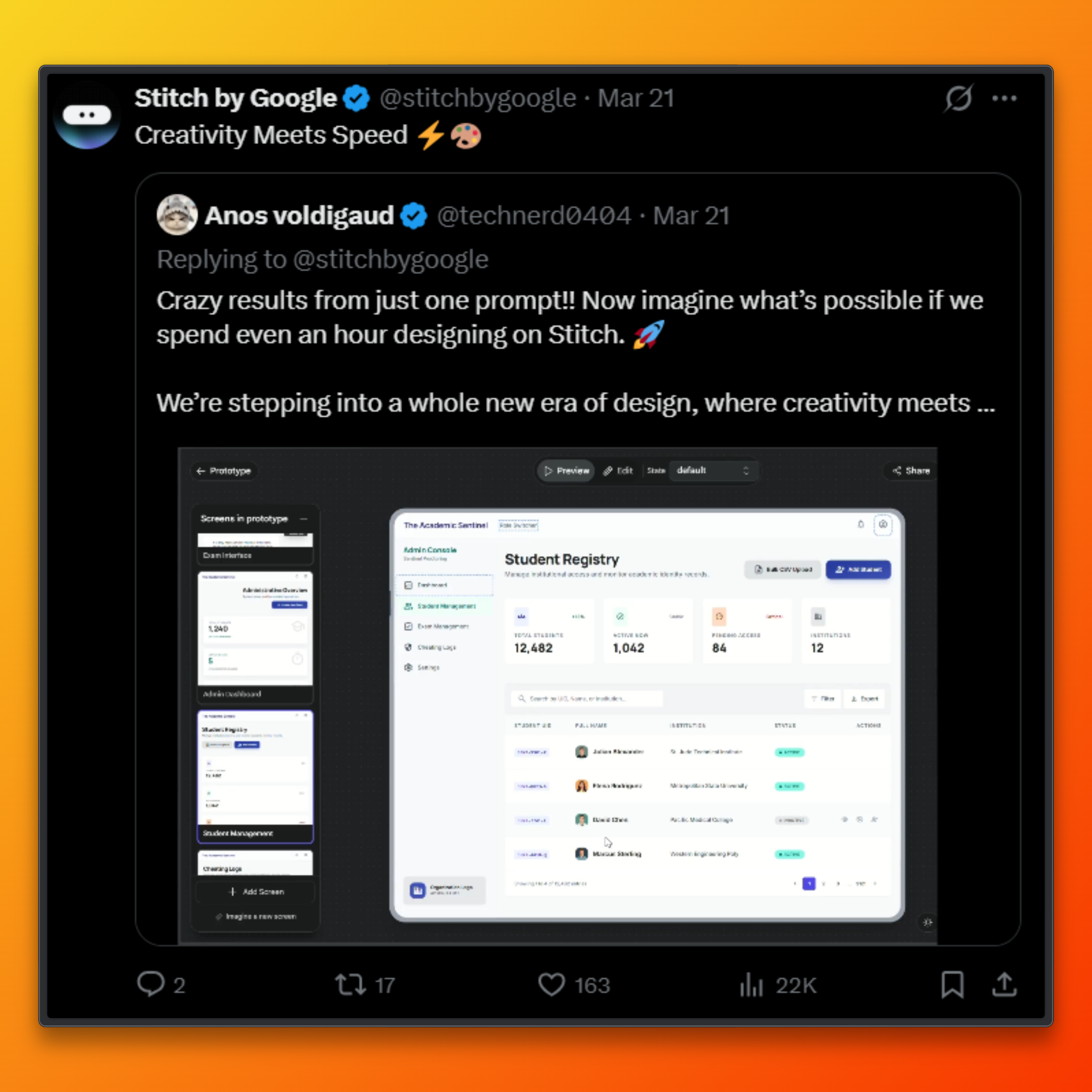
Google Stitch is an AI design tool introduced by Google at Google I/O 2025. It is built to turn simple inputs into usable UI designs. You can describe a landing page, upload a reference, or sketch an idea, and the tool generates a structured layout.
It runs on Google Gemini models, including newer versions like Gemini 2.5 Pro. This allows Stitch to understand both text and visuals, so inputs are not limited to prompts alone.
A useful capability is how it connects with design tools. You can take a design from Figma and bring it into Stitch for further changes, or export Stitch outputs back into Figma for refinement. This keeps the workflow flexible without locking you into one tool.
Stitch also supports an agent-style workflow. You can give instructions, refine outputs, and iterate through conversation. The tool remembers context and helps adjust layouts, sections, and messaging across versions, which is helpful when exploring different campaign directions.
It can also work alongside tools like Cursor, Claude Code, and Google CLI environments. In simple terms, this means designs can move closer to development without needing a full handoff at every step.
Overall, Google Stitch focuses on one key stage. It helps turn ideas into visual pages quickly, making it useful for early planning, testing concepts, and shaping campaign directions before final execution.
Key Features of Google Stitch
Google Stitch is built to reduce the time between an idea and a usable design. Its features focus on speed, flexibility, and iteration, which are key during early campaign planning.
- Prompt to UI Generation: You can describe a landing page in simple terms and get a structured layout within seconds. This makes it easy to turn rough campaign ideas into visual pages without starting from scratch.
- Supports Multiple Inputs: Stitch accepts more than just text. You can upload screenshots, references, or rough sketches. The tool interprets these inputs and builds layouts based on them, which helps when ideas are still evolving.
- Fast Iteration Through Conversation: Design changes can be made by giving simple instructions. You can adjust layout, messaging sections, or structure step by step. The tool keeps context, so each update builds on the previous version.
- Figma Integration: Designs can be exported to Figma for further refinement. This helps move from early concepts to more polished designs without recreating everything.
- Early Code Output: Stitch can generate front-end code along with the design. This helps reduce the gap between design and development, especially during the initial stages of a project.
- Agent-Based Workflow: The tool works like an assistant that guides the design process. It suggests improvements, maintains structure, and helps generate multiple variations. This is useful when exploring different directions for a campaign.
What is Framer AI?
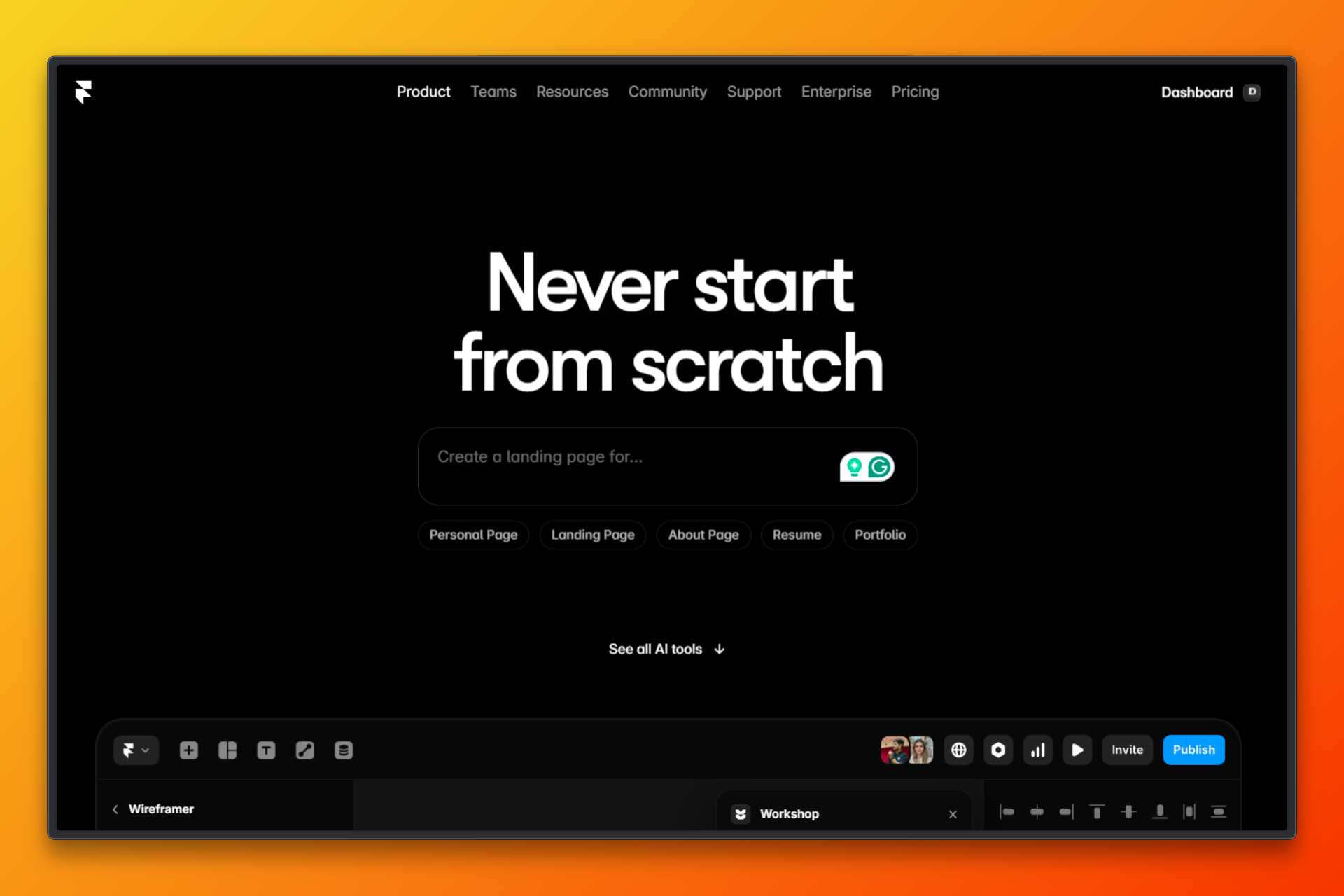
Framer AI is an AI-powered website builder introduced as part of Framer’s evolution from a design tool into a full website platform around 2023. It is built to turn simple prompts into complete, live websites.
You begin by describing the type of site you need. Framer AI uses its internal AI models to generate a full layout with structure, sections, and basic copy. The output is not just a design. It is a working website that can be edited and published.
A key strength is its template system. Framer offers a large set of pre-built templates designed for landing pages, SaaS sites, portfolios, and more. These templates are fully responsive, which means they adjust automatically across desktop, tablet, and mobile screens. This reduces the need for manual adjustments.
Framer AI also supports direct publishing. Hosting is built in, so pages can go live without moving to another platform. You can edit content, update sections, and manage pages within the same tool.
Overall, Framer AI focuses on execution. It helps turn ideas into responsive, live websites quickly, with fewer steps between design and launch.
Google Stitch vs Framer AI
Both Google Stitch and Framer AI aim to reduce the time between an idea and a usable page. In most early-stage scenarios, Google Stitch gives more flexibility and control. Framer AI performs better when the goal is to publish quickly.
Here are the differences:
When to Use What
- Use Google Stitch when you want to explore ideas, test different layouts, and refine concepts before committing
- Use Framer AI when you already have a direction and need to launch a page quickly
Example Prompt You Can Try
To see the difference clearly, you can run the same prompt in both tools:
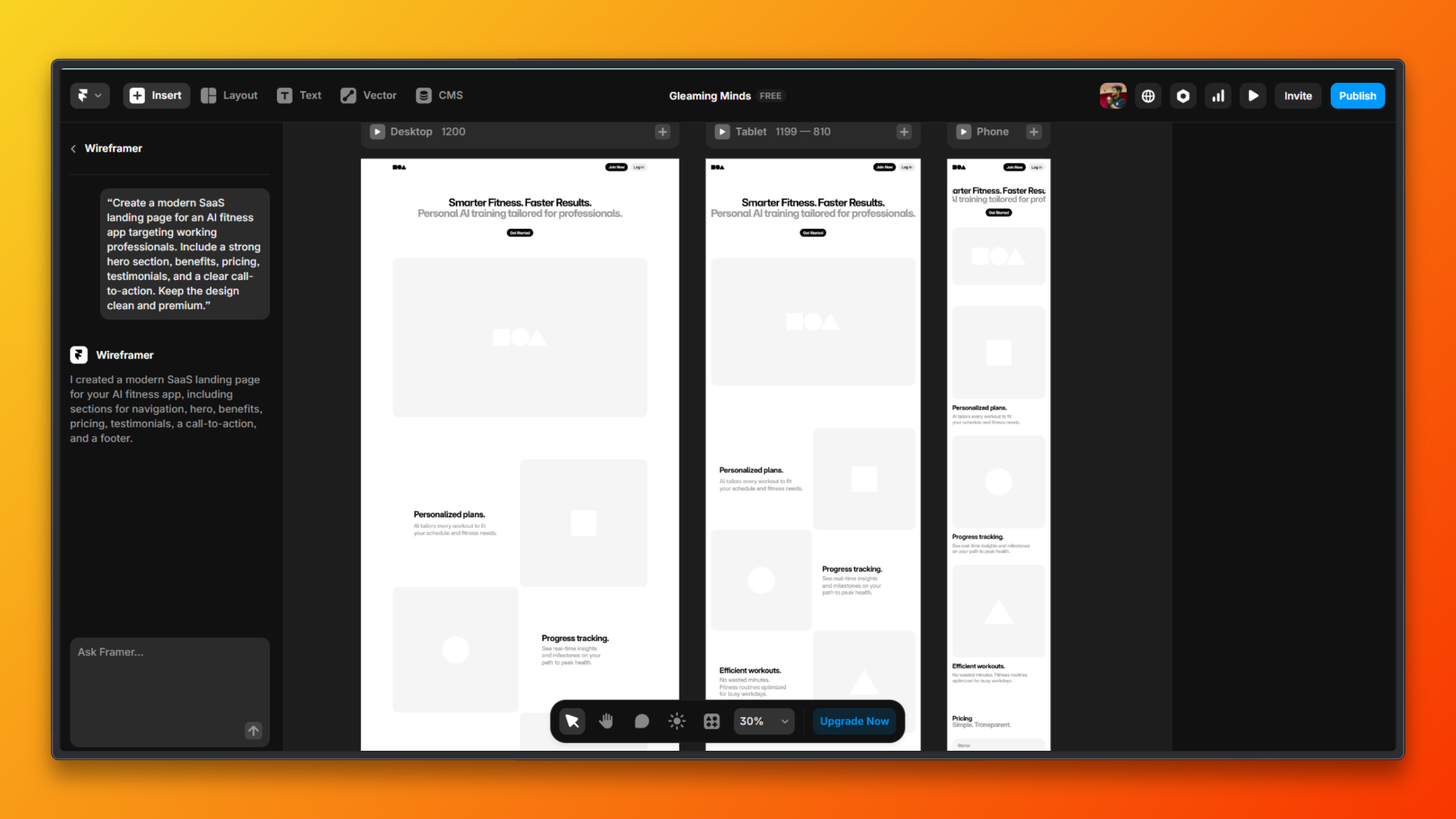
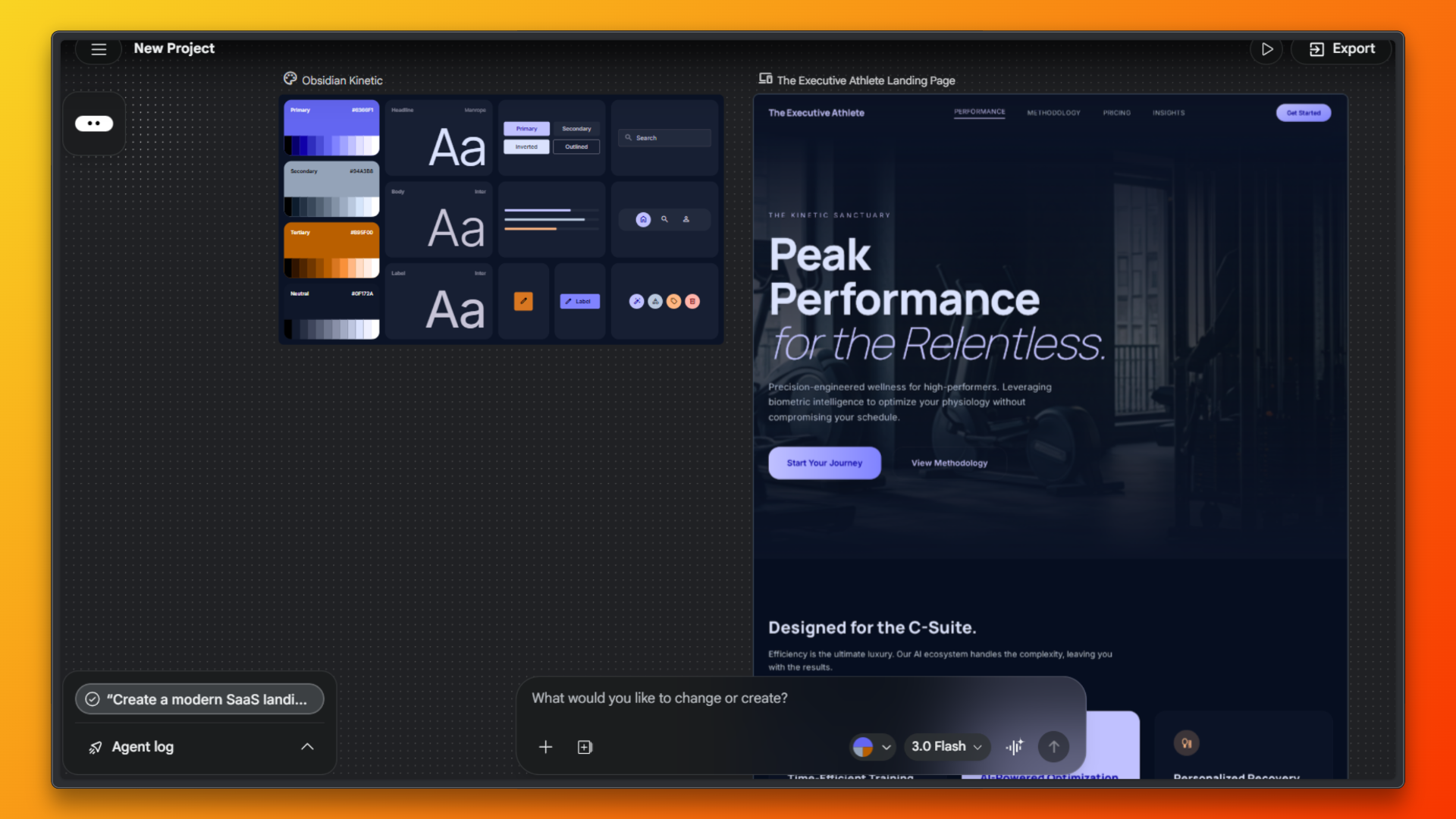
“Create a modern SaaS landing page for an AI fitness app targeting working professionals. Include a strong hero section, benefits, pricing, testimonials, and a clear call-to-action. Keep the design clean and premium.”
In Framer AI, the output generated a complete layout across web, tablet, and mobile views. The structure was clear and ready for publishing, but the design elements felt basic and needed further refinement.
In Google Stitch, the response was closer to a finished design. It first defined a color palette and then generated a premium landing page with a stronger visual hierarchy and detailed design elements. The output also felt more polished at the first pass.
Key Insight
Google Stitch stands out when design quality and idea exploration matter, whereas Framer AI is more effective when the focus is on getting a page live quickly. Together, they cover different parts of the same workflow.
The Practical Workflow for Marketers
A more effective way to use Google Stitch is to place it at the center of early campaign planning, where most key decisions are made.
The process starts with generating multiple landing page directions from a single idea. You can explore different headlines, layouts, and value propositions side by side, which helps identify what works best for your audience.
Stitch also supports quick iteration. You can refine sections and adjust messaging in real time. It becomes easier to answer key questions early, such as:
- Which headline stands out
- Which layout is clearer
- Which version presents the product better
A key advantage is instant prototyping. The generated designs can quickly act as prototypes, making it easier to share ideas, gather feedback, and validate concepts before moving forward.
The output is also flexible. Designs can be exported into formats like MCP, ZIP, or moved into Figma for further refinement or handoff. This approach improves decision clarity. Issues in messaging or structure can be spotted early, and stronger ideas move ahead with more confidence.
What This Means for Marketers
AI website builders are changing how campaigns are planned and executed. The impact goes beyond speed and affects how decisions are made.
Here are the key ways this impacts marketers:
- Faster Idea Validation: Marketers can turn concepts into visual pages within minutes. This makes it easier to validate ideas early and avoid spending time on weak directions.
- More Control in Early Stages: Tools like Google Stitch allow marketers to shape layouts and messaging directly, with fewer dependencies.
- Stronger Experimentation Approach: You can test completely different concepts, not just small changes. This leads to clearer insights and better campaign direction.
- Early Feedback and Alignment: Instant prototypes help share ideas, collect feedback, and align on direction before moving ahead.
Conclusion
AI website builders have improved how quickly ideas turn into real pages. Tasks that once took days can now be done in minutes, especially in the early stages of campaign planning.
Tools like Google Stitch and Framer AI show how this space is growing. Stitch stands out when the focus is on exploring ideas and creating strong designs. Framer AI is more useful when the goal is to publish and go live quickly.
The real value comes from how these tools change the process. Marketers can test more ideas, refine direction earlier, and reduce time spent on back-and-forth. This leads to better decisions before execution begins.
AI does not replace strategy. It improves how fast ideas can be tested and improved. Marketers who use these tools well will be able to move faster, learn quicker, and build stronger campaigns over time.